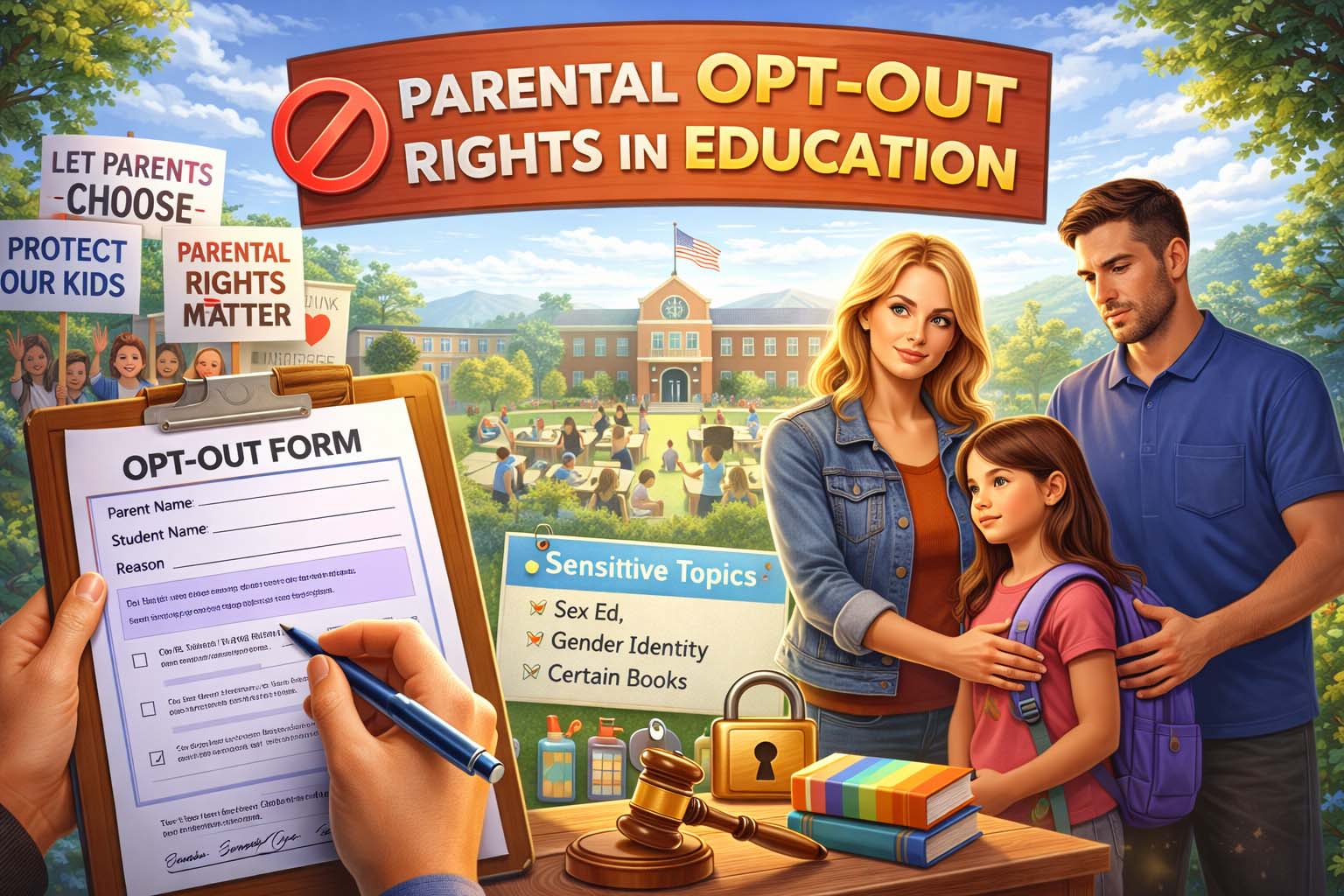
Parental opt-out rights in education have become an important topic for families, schools, and policymakers. Many parents want to understand when they can excuse their child from certain school activities, lessons, surveys, or programs. At the same time, schools aim to provide a consistent learning environment while following legal requirements and educational standards.
Because laws and school policies differ by country, state, province, and district, it is essential to understand the general principles behind parental opt-out rights and how they may apply locally. In many places, parents have some level of authority to request alternatives or exemptions for specific activities, while schools also maintain responsibilities for student welfare and curriculum delivery.
This guide explains parental opt-out rights in education, common areas where opt-outs may exist, and practical steps families can take.
What Are Parental Opt-Out Rights in Education?
Parental opt-out rights in education generally refer to the ability of a parent or legal guardian to request that their child not participate in certain school activities, lessons, or data collection programs.
These rights often apply in areas such as:
- Sex education or family life instruction
- Certain health lessons
- Student surveys or questionnaires
- Media release permissions
- Religious activities where applicable
- Specific extracurricular events
- Some testing programs depending on jurisdiction
The exact scope of these rights depends on local law and school policy.
Why Parental Opt-Out Rights Matter
Families and schools often value cooperation. Opt-out policies can help balance educational goals with parental beliefs, family values, privacy concerns, and individual student needs.
1. Respect for Family Values
Some families may have moral, cultural, or religious concerns about certain content.
2. Student Well-Being
Parents may request alternatives if a topic may cause distress or conflict with a child’s needs.
3. Privacy Protection
Some opt-outs relate to surveys, personal data collection, or media use.
4. Parent-School Partnership
Clear communication helps reduce misunderstandings and build trust.
Common Areas Where Opt-Out Rights May Apply
1. Health and Sex Education
One of the most common topics connected to parental opt-out rights in education is health or sex education. Some school systems allow parents to remove students from specific portions of instruction.
This may include:
- Human development lessons
- Reproductive health content
- Relationship education (depending on location)
In some places, only certain units are optional, while core health education remains mandatory.
2. Surveys and Questionnaires
Schools may use surveys for research, wellness screening, or climate assessment. Parents may sometimes have the right to review or decline participation.
Examples:
- Mental health screenings
- Social behavior surveys
- Research questionnaires
- Non-essential demographic studies
3. Media and Photo Permissions
Many schools request permission before using a student’s image or name in:
- School websites
- Yearbooks
- Promotional materials
- Social media pages
Parents may often opt out of public use of student images.
4. Standardized Testing
Testing opt-out rules vary widely. Some regions allow refusals for certain assessments, while others require participation or limit alternatives.
Parents should verify:
- Whether opt-out is legally recognized
- Potential academic consequences
- Attendance requirements during testing windows
5. Religious or Cultural Activities
Some schools permit alternative arrangements for assemblies, celebrations, or activities that conflict with family beliefs.
How Schools Typically Handle Opt-Out Requests
Most schools use written procedures. Parents may need to submit a formal request before a deadline.
Common steps include:
- Review district handbook or school policy
- Contact teacher or administrator
- Submit written request
- Confirm approved alternative activity
- Keep records of communication
Being respectful and organized often leads to better outcomes.
Do Parents Have Unlimited Opt-Out Rights?
Usually, no. While parents often have important rights, schools also have authority to deliver required curriculum and maintain standards.
Parents may not be able to opt out of:
- Core reading instruction
- Basic math standards
- Required attendance rules
- Safety drills
- Essential curriculum required by law
That is why understanding local regulations is critical.
How to Research Local Policies
Because parental opt-out rights in education differ by location, families should verify rules directly from trusted sources.
Check:
- School district handbook
- Ministry/Department of Education website
- State education agency
- School board policy manual
- Official parent notices
If needed, request clarification in writing.
Best Practices for Parents
1. Start with Communication
Before escalating concerns, speak with the teacher. Sometimes misunderstandings can be resolved quickly.
2. Be Specific
Instead of objecting broadly, identify the exact lesson, activity, or survey.
3. Ask for Alternatives
Schools may offer:
- Independent study
- Alternate reading assignments
- Separate supervised activity
- Modified participation
4. Stay Respectful
Collaborative communication usually works better than confrontation.
5. Keep Documentation
Save emails, letters, forms, and policy references.
Best Practices for Schools
Schools also benefit from clear systems.
Transparency
Share curriculum summaries and timelines in advance.
Consistency
Apply policies fairly to all families.
Respect
Listen to parent concerns without defensiveness.
Student Focus
Prioritize educational continuity and student well-being.
Common Misunderstandings
Myth 1: Parents Can Opt Out of Anything
Not usually. Rights depend on law and policy.
Myth 2: Schools Ignore Parents Automatically
Many schools do honor lawful requests when submitted properly.
Myth 3: Opt-Out Means No Consequences
Sometimes missed content, alternate assignments, or testing implications may apply.
Parental Rights vs Student Rights
As students grow older, some legal systems recognize increasing student privacy or autonomy, especially in counseling, health matters, or post-secondary settings. This can affect how decisions are made.
Families should understand that age and local law may matter.
Digital Learning and New Challenges
Modern education includes apps, platforms, and online services. Parents may ask about opting out of:
- Third-party educational apps
- Data-sharing platforms
- Recorded classroom sessions
- AI-based learning tools
Schools increasingly need transparent digital consent processes.
Conflict Resolution Tips
If disagreement continues:
- Re-read policy language
- Request meeting with principal
- Escalate to district administration if needed
- Seek legal advice for serious rights disputes
- Remain focused on student interests
Why This Topic Continues to Grow
Interest in parental opt-out rights in education has increased due to:
- Greater curriculum transparency demands
- Expanding student data systems
- Social and cultural debates
- More parent involvement in schooling
- Online learning technology growth
Conclusion
Parental opt-out rights in education are an important part of the relationship between families and schools. While these rights can cover curriculum segments, surveys, media permissions, and other activities, they are not unlimited and vary widely by jurisdiction.
The best approach is informed, respectful collaboration. Parents should review local policies, communicate early, and seek practical solutions that support both family values and student learning.
When families and schools work together, students benefit most.