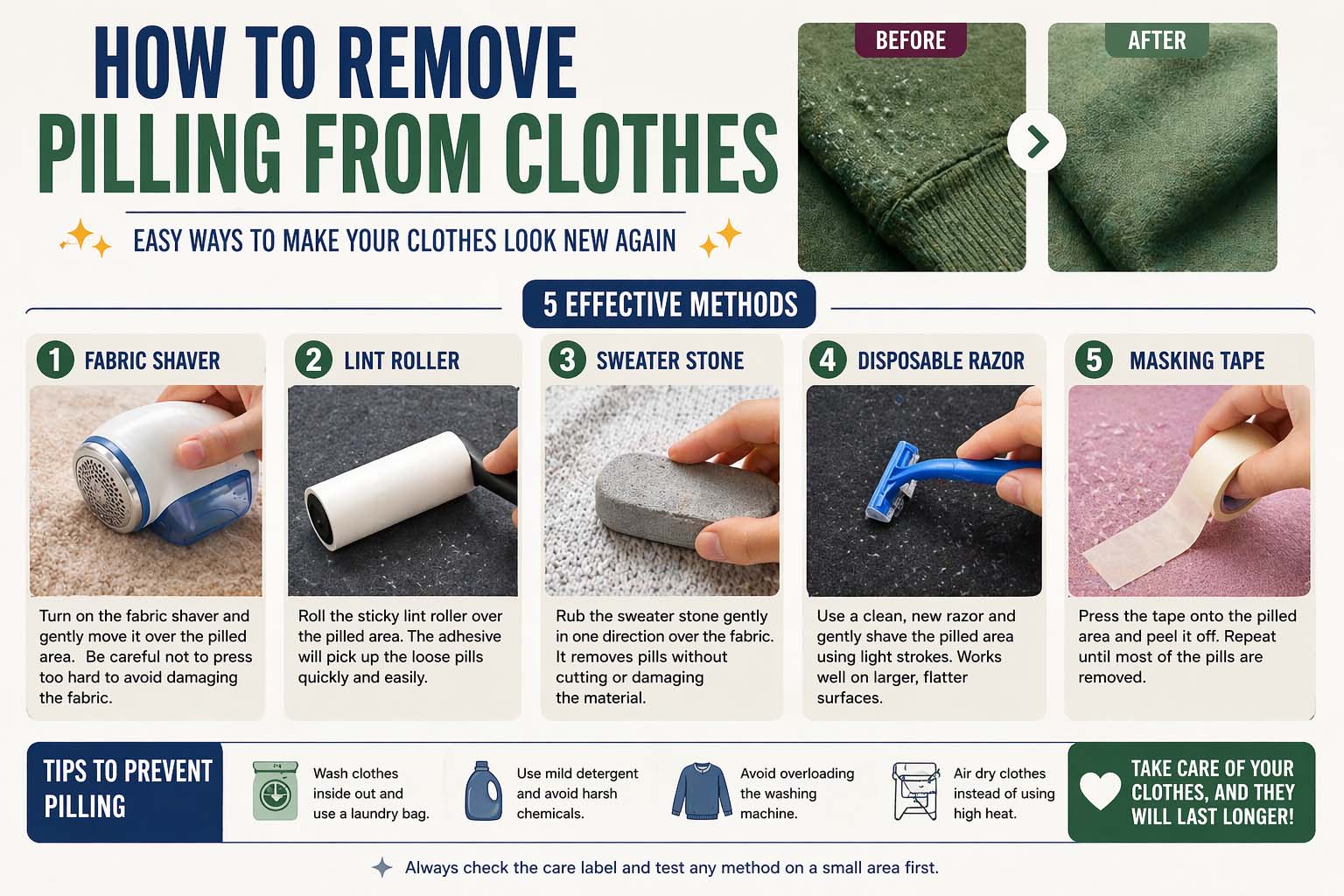
If you have ever noticed tiny fuzzy balls forming on your favorite sweater, leggings, or t-shirt, you are not alone. Many people ask how to remove pilling from clothes because fabric pills can make garments look old, worn out, and less attractive. Pilling happens when loose fibers on the surface of fabric rub together and form small knots. This is common on sweaters, workout clothes, blankets, socks, and many everyday garments.
The good news is that pilling does not mean your clothes are ruined. With the right methods, you can restore the smooth look of your garments and help prevent future pilling. In this guide, you will learn how to remove pilling from clothes safely, easily, and effectively using tools you may already have at home.
What Causes Pilling on Clothes?
Before learning how to fix it, it helps to understand why pilling happens. Fabric pills form when fibers break loose due to friction. As the clothing rubs during washing, drying, or wearing, those loose fibers twist together into small balls.
Common causes include:
Friction During Wear
Areas like underarms, inner thighs, elbows, and sides of shirts often pill because they rub frequently.
Washing Machine Agitation
Heavy wash cycles can cause fibers to loosen and tangle.
Dryer Heat and Tumbling
The dryer increases friction, which can worsen pilling.
Fabric Type
Blended fabrics, synthetic fibers, wool, and softer knits are more likely to pill.
How to Remove Pilling From Clothes Safely
If you want to know how to remove pilling from clothes, there are several easy methods depending on the fabric type and tools available.
Use a Fabric Shaver
One of the most effective ways to remove pills is with a fabric shaver. This small handheld device gently cuts off fuzz balls without damaging the garment when used properly.
How to Use It
Lay the clothing flat on a smooth surface. Stretch the fabric lightly and move the shaver gently across the surface. Work slowly and avoid pressing too hard.
Fabric shavers are ideal for sweaters, coats, fleece, and knitwear.
Use a Disposable Razor
A clean disposable razor can also work well if used carefully.
Steps
Place the garment flat on a table. Pull the fabric tight and lightly glide the razor across the pills. Use slow, gentle strokes.
This method works best on sturdy fabrics but should be avoided on delicate materials like cashmere or silk.
Try a Sweater Comb
A sweater comb is designed specifically to remove pills from knit garments. It lifts and collects fuzz while helping smooth the surface.
This is a great option for wool sweaters and cardigans.
Use Tape or Lint Rollers
If the pilling is minor, sticky tape or a lint roller can remove loose fuzz and light surface pills.
This is not as strong as shaving methods, but it is useful for quick touch-ups before wearing clothes.
Use Small Scissors for Delicate Areas
For stubborn pills in seams or corners, carefully trim them with small scissors.
Never pull pills off by hand because this can stretch fibers and damage the garment.
Best Method by Fabric Type
Different fabrics need different care when deciding how to remove pilling from clothes.
Cotton
Cotton blends can usually handle a fabric shaver or razor.
Wool
Use a sweater comb or gentle fabric shaver.
Synthetic Activewear
A fabric shaver works best.
Cashmere
Use only tools made for delicate knits and work very gently.
Fleece
Fabric shavers are usually the fastest solution.
How to Prevent Pilling in the Future
Once you remove pilling, you will want to stop it from returning. Prevention is one of the smartest clothing care habits.
Wash Clothes Inside Out
Turning garments inside out reduces friction on the visible side of the fabric.
Use Gentle Wash Cycles
Choose delicate or gentle settings instead of heavy agitation.
Wash Similar Fabrics Together
Avoid washing rough items like jeans or towels with soft sweaters and leggings.
Use Cold Water
Cold water is gentler on fibers than hot water.
Air Dry When Possible
Skipping the dryer reduces friction and heat damage.
Use Mild Detergent
Harsh detergents can weaken fibers over time.
Avoid Overloading the Washer
Crowded loads create extra rubbing and tangling.
Clothes Most Likely to Pill
Some garments naturally pill more than others. These include:
- Sweaters
- Knit dresses
- Leggings
- Fleece jackets
- Scarves
- Socks
- Low-cost synthetic blends
Higher-quality fabrics may still pill, but they often do so less quickly.
Common Mistakes to Avoid
When learning how to remove pilling from clothes, avoid these common errors.
Pulling Pills Off by Hand
This can tear fibers and stretch fabric.
Using Too Much Pressure
Razors and shavers should glide lightly.
Using Sharp Tools on Thin Fabrics
Delicate materials can snag easily.
Ignoring Care Labels
Always check the garment label first.
Drying Everything on High Heat
Heat increases wear and friction.
Can You Restore Clothes Completely?
In many cases, yes. Pilling usually affects only the surface appearance of fabric. Removing pills can make clothing look newer, cleaner, and better maintained. While repeated pilling may happen over time, regular care can extend the life of your wardrobe significantly.
Is Pilling a Sign of Poor Quality?
Not always. Even expensive fabrics like wool and cashmere can pill because soft fibers naturally loosen. Lower-quality synthetic blends may pill faster, but pilling alone does not always mean the garment is bad.
Often, it is more about fiber type, friction, and washing habits than price.
Quick Weekly Clothing Care Routine
To keep clothes looking fresh:
- Inspect sweaters and activewear weekly
- Use a lint roller regularly
- Remove pills before they build up
- Fold delicate knits instead of hanging
- Wash gently and air dry when possible
Conclusion
If you have been wondering how to remove pilling from clothes, the solution is easier than you might think. Tools like fabric shavers, sweater combs, razors, and lint rollers can quickly restore the smooth look of your garments. Just choose the right method for the fabric type and work gently.