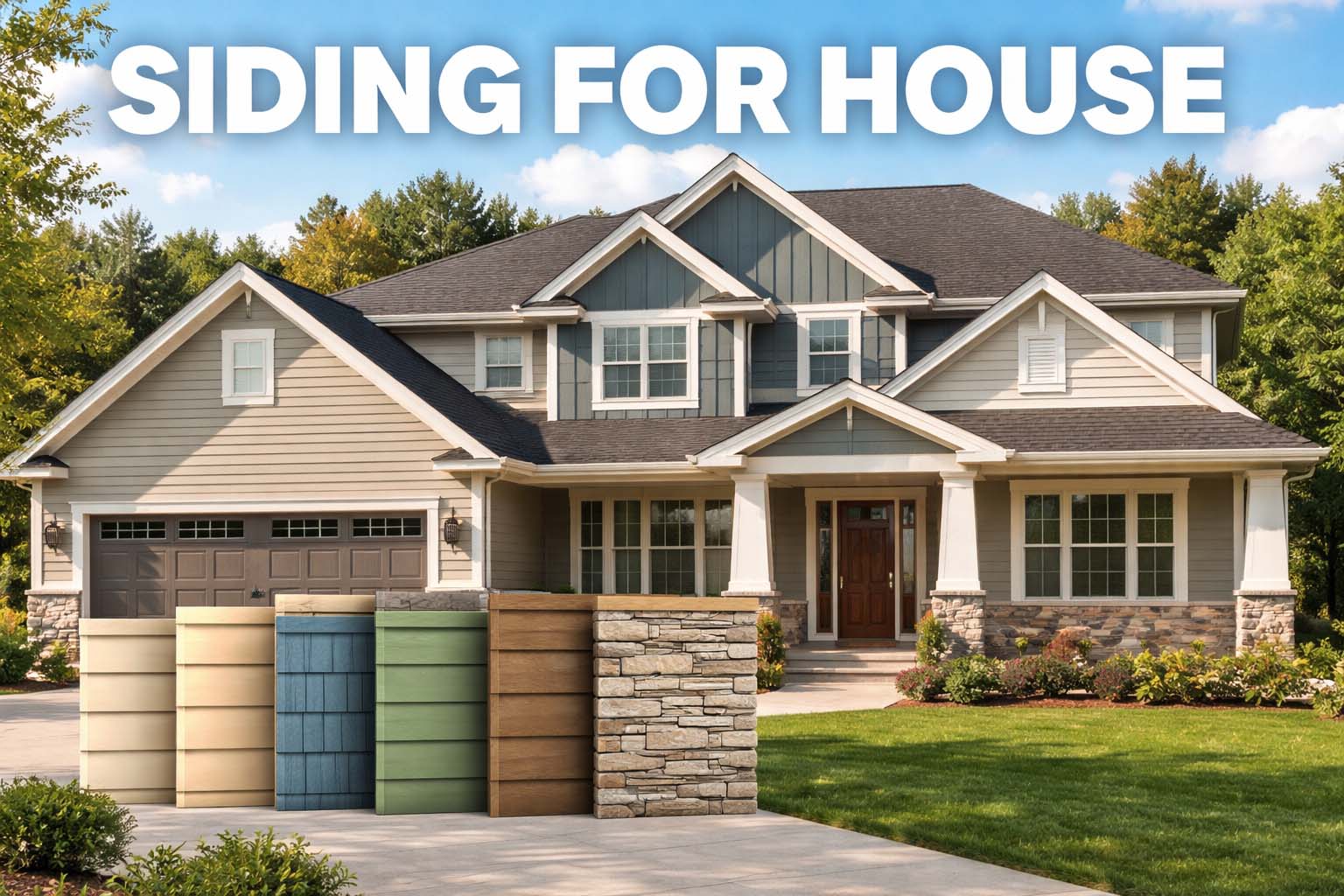
Choosing the right siding for house projects is one of the most important decisions homeowners make. Exterior siding protects your home from weather, increase property value. or upgrading an older exterior, selecting the best siding material matters.
Modern homeowners can choose from many siding types, each with different prices, maintenance levels, durability, and appearance. Some prioritize low cost, while others focus on long-lasting beauty or weather resistance.
This guide explains the best siding for house options, their advantages, costs, and how to select the right material for your needs.
What Is House Siding?
House siding is the protective material installed on the outside walls of a home. It acts as a barrier against rain, wind, sunlight, insects, and temperature changes.
Besides protection, siding also:
- Enhances exterior appearance
- Adds insulation value
- Reduces maintenance needs
- Increases resale value
- Helps prevent moisture damage
and performance of your home.
Why Siding Matters
Exterior walls are constantly exposed to harsh conditions. Good siding protects the structure underneath and reduces costly repairs.
Main Benefits of Quality Siding:
- Weather resistance
- Improved energy efficiency
- Better home value
- Lower maintenance
- Modern appearance
- Increased durability
Replacing old damaged siding can be one of the smartest home upgrades.
Popular Types of Siding for House Projects
There are several common materials used in residential siding. Each has strengths and drawbacks.
Vinyl Siding
Vinyl is one of the most popular and affordable choices.
Advantages:
- Budget-friendly
- Low maintenance
- Many colors available
- Resistant to insects
- Easy installation
Considerations:
- Can crack in extreme cold
- May fade over time
- Less premium look than some materials
Vinyl is ideal for homeowners wanting value and convenience.
Fiber Cement Siding
Fiber cement combines cement, sand, and cellulose fibers. It is known for durability.
Advantages:
- Fire resistant
- Weather resistant
- Looks like wood
- Long lifespan
- Strong resale appeal
Considerations:
- Higher installation cost
- Heavier material
- Professional installation recommended.
Wood Siding
Wood siding offers classic beauty and natural charm.
Advantages:
- Timeless appearance
- Natural texture
- Can be painted or stained
- Great for traditional homes
Considerations:
- Requires maintenance
- Vulnerable to moisture if neglected
- Higher long-term upkeep
Wood suits homeowners who love authentic style.
Metal Siding
Metal siding includes aluminum and steel options.
Advantages:
- Durable
- Fire resistant
- Low maintenance
- Modern appearance
- Resistant to pests
Considerations:
- Can dent
- Industrial look may not suit every home
- Some options cost more
Metal siding is growing in popularity for modern homes.
Brick Veneer and Stone Veneer
These materials provide a premium appearance without full masonry construction.
Advantages:
- High-end curb appeal
- Durable exterior finish
- Low maintenance
- Strong resale value
Considerations:
- Higher upfront cost
- Professional installation required
Excellent for homeowners wanting luxury style.
Best Siding for House by Budget
Low Budget
- Vinyl siding
- Basic engineered wood
Mid Budget
- Fiber cement
- Better quality vinyl
- Metal siding
Premium Budget
- Brick veneer
- Stone veneer
- High-end wood siding
Choose a material that balances cost with long-term value.
Best Siding for House by Climate
Climate matters when choosing siding.
Hot and Sunny Areas
- Fiber cement
- Stucco
- UV-resistant vinyl
Cold Regions
- Insulated vinyl
- Fiber cement
- Engineered wood
Rainy or Humid Areas
- Fiber cement
- Metal siding
- Properly sealed vinyl
Coastal Areas
- Fiber cement
- Aluminum siding
- Moisture-resistant materials
Local weather should always guide your decision.
How Much Does House Siding Cost?
Costs vary by material, labor, region, and house size.
General Cost Levels:
- Vinyl: Lower cost
- Wood: Medium to high
- Fiber cement: Medium to high
- Metal: Medium
- Brick/Stone veneer: High
Labor can be a large part of total expense, especially for complex homes.
Energy Efficiency Benefits
Some siding improves insulation and helps lower utility bills.
Energy-Saving Features:
- Insulated vinyl panels
- Weather barriers under siding
- Proper sealing
- Quality installation
Even beautiful siding performs poorly if installed incorrectly.
How to Choose the Right Siding
Ask these questions before buying:
- What is my budget?
- How much maintenance do I want?
- What style fits my house?
- What climate do I live in?
- How long will I stay in this home?
- Do I want higher resale value?
The best siding is the one that matches your priorities.
Signs You Need New Siding
Old siding may need replacement if you notice:
- Cracks or holes
- Warping panels
- Rot or mold
- Faded severe discoloration
- Rising energy bills
- Frequent repainting needs
- Moisture damage indoors
Replacing siding early can prevent structural issues.
Maintenance Tips for House Siding
Different materials need different care.
Basic Maintenance:
- Wash annually
- Inspect for cracks
- Reseal where needed
- Keep gutters clean
- Trim plants away from walls
- Repair damage quickly
Regular maintenance extends lifespan.
DIY vs Professional Installation
Some homeowners consider DIY siding installation, especially vinyl.
DIY Pros:
- Lower labor cost
- Personal satisfaction
DIY Risks:
- Incorrect sealing
- Water damage issues
- Warranty problems
- Poor appearance
Professional installation is often worth the investment.
Boosting Home Value With Siding
New siding can improve first impressions and resale value. Buyers often prefer homes with updated exteriors because it reduces future maintenance concerns.
Fresh siding also photographs well for listings, improving market appeal.
Common Mistakes to Avoid
Avoid these errors:
- Choosing by price only
- Ignoring climate suitability
- Poor installation quality
- Mismatched colors
- Skipping moisture barriers
- Delaying repairs too long
Smart planning saves money later.
Trending Siding Styles
Popular modern trends include:
- Dark gray exteriors
- White farmhouse siding
- Mixed wood and stone accents
- Vertical siding panels
- Clean minimalist lines
Style trends change, but timeless colors remain safe choices.
Conclusion
Choosing the best siding for house projects can protect your home, lower maintenance, improve efficiency, and boost curb appeal. Whether you prefer affordable vinyl, durable fiber cement, elegant wood, or premium stone veneer, there is an option for every budget and style.
The smartest decision balances cost, climate performance, maintenance needs, and long-term value. With proper planning and quality installation, new , more beautiful home for years to come.