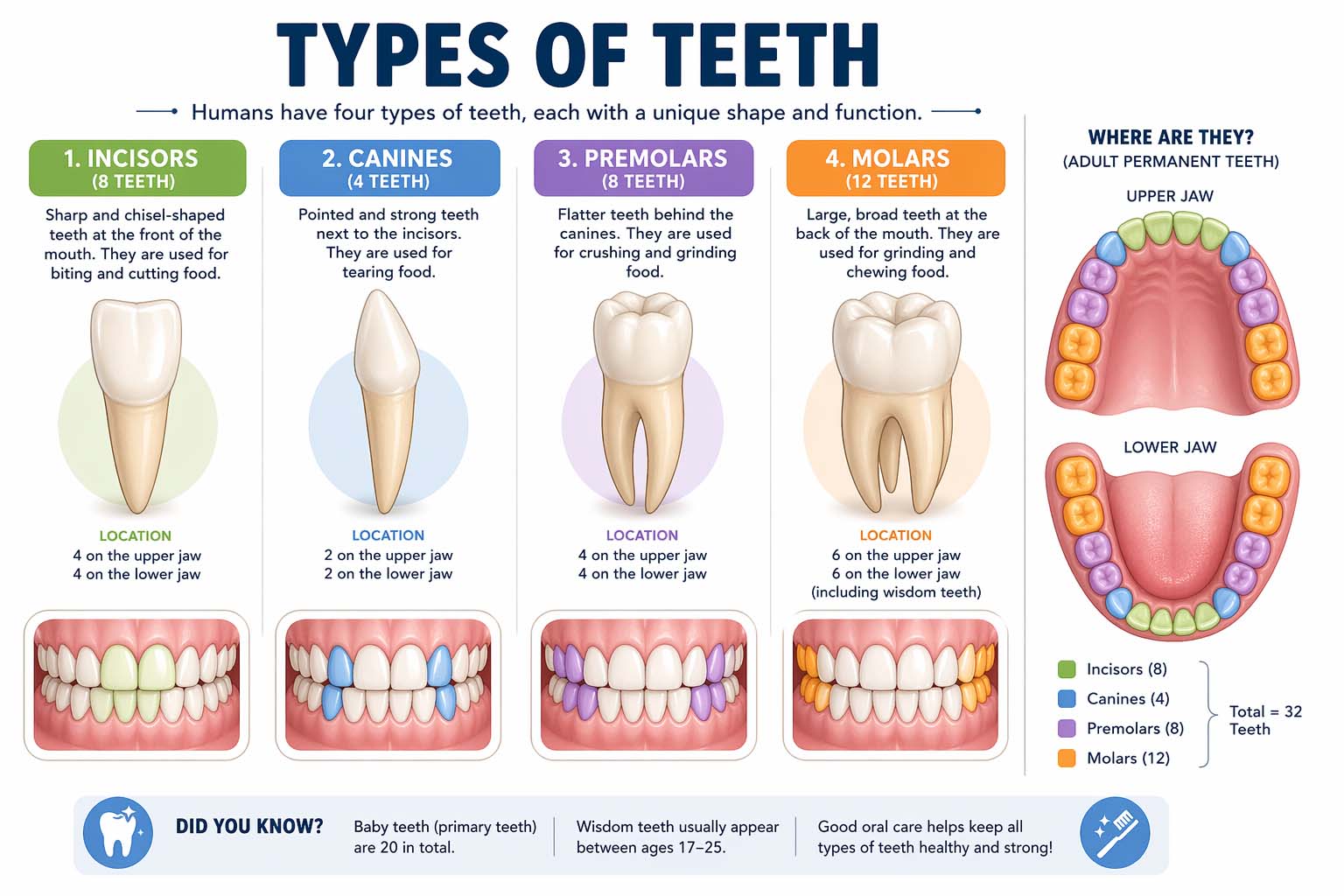
Understanding the types of teeth is important for learning how the mouth works and how to maintain good oral health. Human teeth are designed for different tasks such as biting, tearing, and grinding food. Each type of tooth has a unique shape and purpose that helps with digestion, speech, and facial structure.
Children and adults have different sets of teeth throughout life. Baby teeth appear first, followed by permanent teeth. Knowing the names and functions of each tooth can help people care for their smile and recognize dental issues early.
Why Teeth Are Important
Teeth do much more than improve appearance. They are essential for chewing food into smaller pieces, making swallowing easier and supporting digestion. Teeth also help with pronunciation when speaking clearly.
Healthy teeth support jaw alignment and facial shape. Losing teeth or neglecting dental care can affect confidence, nutrition, and overall health.
That is why learning about the types of teeth can help people appreciate the value of proper dental hygiene.
How Many Teeth Do Humans Have?
Most adults have 32 permanent teeth, including wisdom teeth. Some people may have fewer if wisdom teeth are removed or never develop.
Children usually have 20 primary teeth, also called baby teeth. These temporary teeth begin appearing in infancy and are gradually replaced by adult teeth during childhood.
The adult mouth contains four main types of teeth:
- Incisors
- Canines
- Premolars
- Molars
Each group has a specific role.
Incisors
. Adults typically have eight incisors, with four on the top and four on the bottom.
These teeth are flat and sharp, making them ideal for cutting or biting food. When you bite into an apple or sandwich, incisors do most of the work.
Incisors are often the most visible teeth when smiling, so keeping them clean and healthy is especially important.
Canines
Canines are the pointed teeth next to the incisors.
These teeth are designed for tearing food, especially tougher foods like meat. Their pointed shape makes them stronger and more stable than incisors.
Canines also help guide the alignment of the bite and support facial structure.
Premolars
Premolars, also called bicuspids, sit behind the canines. Adults normally have eight premolars.
These teeth have flat surfaces with ridges that help crush and grind food. Premolars act as a bridge between the tearing action of canines and the grinding action of molars.
Children do not have premolars in their baby teeth set. Premolars only appear with permanent teeth.
Molars
Their broad, flat surfaces make them ideal for grinding and chewing food into smaller pieces before swallowing. Molars are powerful teeth built to handle repeated pressure.
First and second molars usually erupt during childhood and early teenage years. Third molars, known as wisdom teeth, often appear later.
Wisdom Teeth
. Many people develop four wisdom teeth, though some may have fewer or none at all.
These teeth often emerge between ages 17 and 25. In some cases, there is not enough space in the jaw, causing pain, crowding, or impaction.
Because of these issues, many people have wisdom teeth removed by a dentist or oral surgeon.
Baby Teeth vs Permanent Teeth
Baby teeth are the first set of teeth children develop. They help with chewing, speaking, and holding space for permanent teeth.
Permanent teeth begin replacing baby teeth around age six and continue developing into the teenage years. Good care of baby teeth is still important because they guide healthy adult tooth development.
Even though baby teeth eventually fall out, they should never be ignored.
Common Dental Problems
Every type of tooth can experience problems if not cared for properly. Some common issues include:
- Cavities
- Gum disease
- Tooth sensitivity
- Cracks or chips
- Misalignment
- Tooth decay
Regular brushing, flossing, and dental checkups help prevent these problems.
How to Keep Teeth Healthy
Maintaining all types of teeth requires consistent oral care habits. Brush twice daily with fluoride toothpaste and floss once a day to remove plaque between teeth.
Limit sugary snacks and drinks that can increase cavity risk. Drinking water and eating balanced meals also support dental health.
Visit a dentist regularly for professional cleaning and early detection of problems.
Fun Facts About Teeth
Teeth are one of the strongest parts of the human body because enamel is extremely hard. However, enamel can still be damaged by poor hygiene, grinding, or acidic foods.
No two people have exactly the same teeth pattern, which is why dental records can be used for identification.
Teeth begin forming before birth, even though they erupt later.
Conclusion
Learning about the types of teeth helps people understand how the mouth functions and why dental care matters. Together, they make eating and speaking possible.
Whether you have baby teeth, permanent teeth, or wisdom teeth, each plays an important role in oral health. By brushing, flossing, and visiting the dentist regularly, you can keep your teeth strong and healthy for years to come.