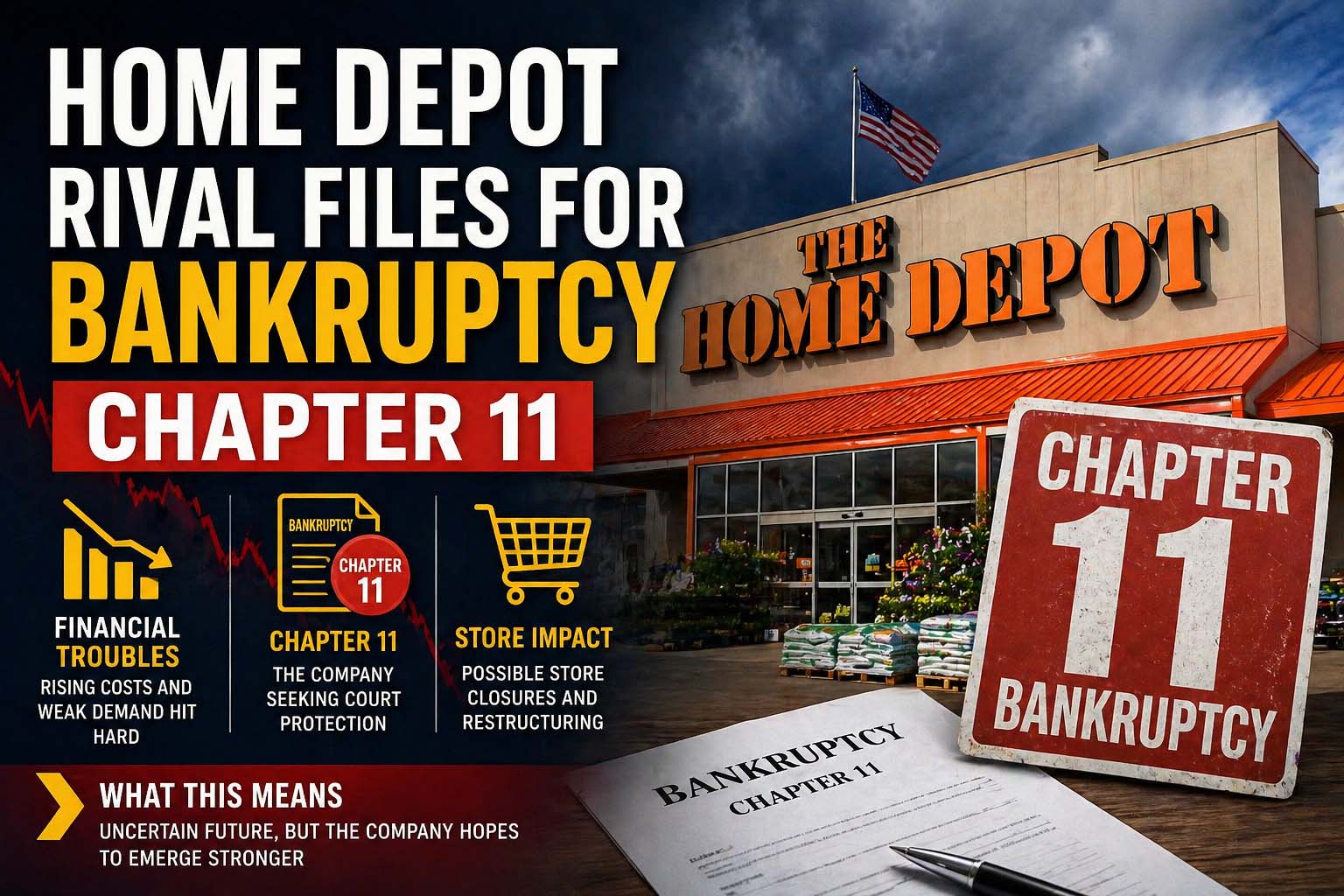
The retail world has seen major changes in recent years, and now another headline is drawing attention: home depot rival files for bankruptcy chapter 11. This news has sparked curiosity among homeowners, contractors, investors, and shoppers who rely on home improvement stores for tools, building materials, and renovation supplies.
Chapter 11 bankruptcy does not always mean a company is shutting down forever. In many cases, it is a legal process that allows a business to reorganize debts, improve operations, and attempt a comeback. When a well-known competitor in the home improvement space takes this step, it raises important questions about the state of the industry and the challenges retailers face today.
Recent reports show that multiple companies competing in the home improvement sector have used Chapter 11 protection. Examples include True Value Co. and North American Builder’s Supply, both of which sought restructuring amid financial pressure.
What Chapter 11 Bankruptcy Means
When people hear the word bankruptcy, they often assume a business is closing permanently. However, Chapter 11 bankruptcy is different from liquidation.
Chapter 11 allows a company to continue operating while it restructures debts, renegotiates contracts, and creates a recovery plan. This can help businesses reduce financial stress and remain open. Many companies use this option to protect jobs, maintain customer relationships, and stabilize operations.
For a company competing against giants like The Home Depot and Lowe’s, Chapter 11 may offer breathing room to adjust strategy and survive in a highly competitive market.
Why Home Improvement Rivals Are Struggling
The reason a home depot rival files for bankruptcy chapter 11 often comes down to several economic pressures happening at once.
Higher Costs
Retailers have faced rising costs for rent, wages, transportation, and inventory. Building materials have also seen price swings in recent years, creating difficulty for suppliers and sellers.
Slower Housing Market
When fewer people buy homes, demand for renovations often declines. Homeowners may delay remodeling projects, reducing traffic at home improvement stores.
Big-Box Competition
Smaller chains and regional suppliers must compete with massive retailers that benefit from scale, marketing budgets, and nationwide distribution systems.
Online Shopping Pressure
Many customers now compare prices online before buying tools or supplies. Retailers without strong e-commerce platforms may lose market share.
Examples in the Market
Several companies connected to the home improvement sector have recently entered Chapter 11 or announced major restructuring.
True Value Co., a well-known hardware cooperative supporting independent stores, filed for Chapter 11 and sought asset sales in 2024.
North American Builder’s Supply, based in Illinois, also filed for Chapter 11 in late 2025 while continuing operations during reorganization.
These examples show that the issue is broader than one company. It reflects ongoing pressure across the home improvement industry.
What Happens to Customers
If a home depot rival files for bankruptcy chapter 11, customers often worry about gift cards, warranties, deliveries, and store closures.
In many Chapter 11 cases:
- Stores remain open during restructuring
- Online ordering may continue
- Existing orders are often honored
- Gift card policies may temporarily change
- Some locations may close if underperforming
Customers should monitor official company announcements for updates.
What Happens to Employees
Employees are usually among the most affected groups when bankruptcy news breaks. Workers may face uncertainty about jobs, schedules, or benefits.
However, Chapter 11 is often designed to preserve operations rather than shut everything down immediately. If restructuring succeeds, many jobs can remain in place.
Impact on the Industry
When a competitor weakens, larger retailers may benefit. Companies like The Home Depot and Lowe’s can capture customers from struggling rivals.
At the same time, fewer competitors can reduce pricing pressure in some markets. This may change how customers shop for tools, flooring, appliances, lumber, and hardware.
The industry is becoming more concentrated, with major chains holding a larger share while smaller operators fight to survive.
Can the Company Recover?
Yes, recovery is possible. Many businesses have used Chapter 11 to reorganize successfully.
A retailer may recover by:
- Closing unprofitable stores
- Reducing debt
- Improving online sales
- Updating supply chains
- Focusing on profitable categories
- Negotiating better vendor contracts
If leadership makes smart changes, bankruptcy can become a turning point rather than an ending.
What Shoppers Should Do
If your local store is affected, it is wise to:
- Save receipts for warranties
- Confirm delivery timelines
- Watch for clearance sales
- Check official announcements
These steps can help customers avoid inconvenience during restructuring.
Final Thoughts
The headline home depot rival files for bankruptcy chapter 11 reflects the real challenges facing modern retail. Rising costs, changing consumer habits, and fierce competition have created a difficult environment for many home improvement businesses.
Chapter 11 does not always mean failure. In many cases, it is a strategic reset that gives companies another chance to compete. Whether the affected rival recovers depends on leadership decisions, customer loyalty, and market conditions.
For shoppers, the best approach is to stay informed and flexible. The home improvement market continues to evolve, and companies that adapt quickly are the ones most likely to survive.